This Is How I’m Starting Photojournalism
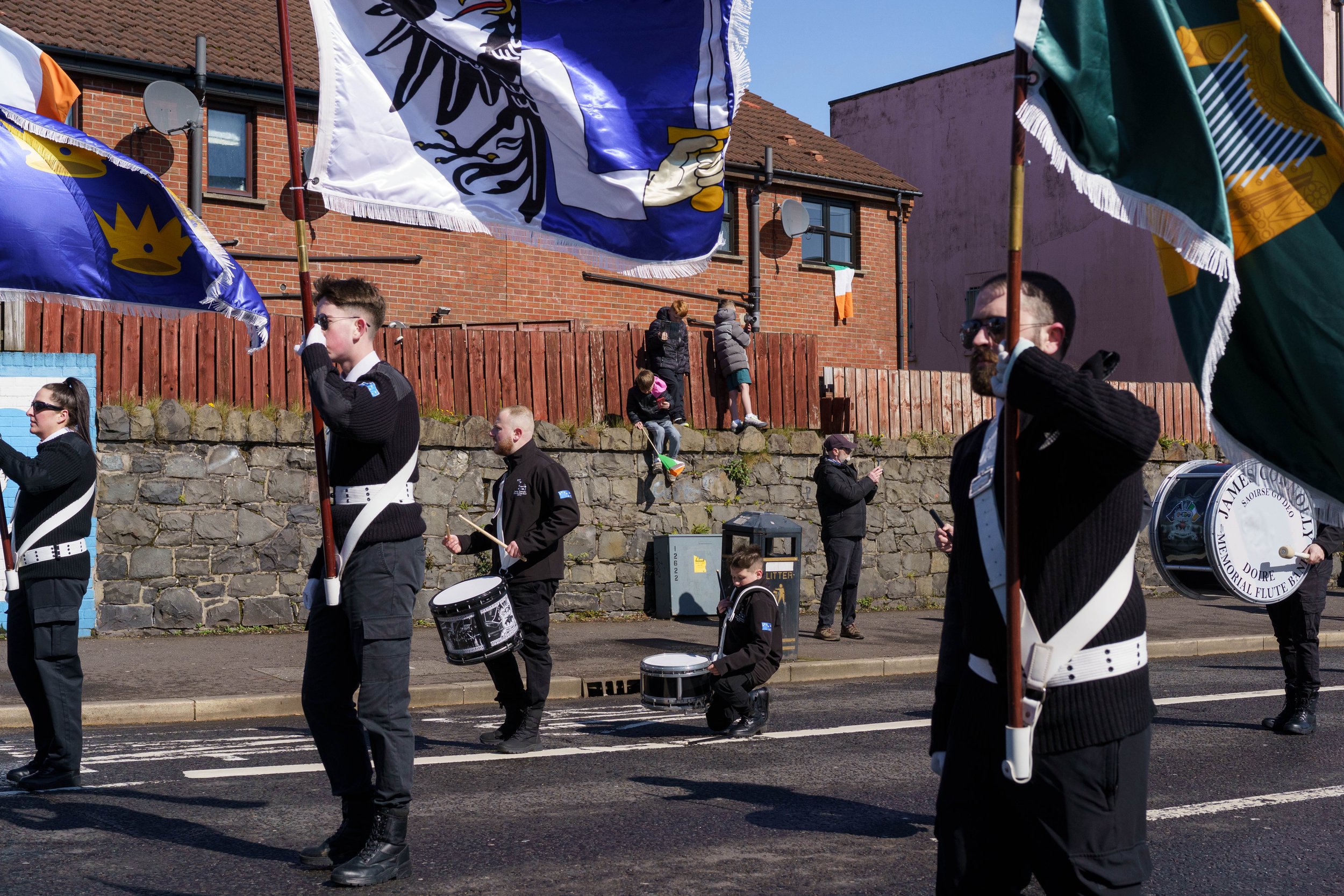
IRSP Easter commemoration, West Belfast, April 2026
Photojournalism is something that interests me for a long time.
But the big question is, how do you start getting assignments? How do you get published?
Last week I decided to focus on creating work towards photojournalism during Easter.
If you don’t know me, I usually work with street and documentary photography, which is pretty close, but when you are creating work for news you have to think a little bit different.
To be honest, I feel that sometimes traditional news uses very boring photos to tell a story.
Which I understand. Photography for the normal viewer needs to be simple and easy to read. Street photography can be more complicated sometimes.
Because I was creating work that I wanted to send to papers, I decided to shoot digital instead.
By doing that my workflow would be way quicker and I could email people with my photos by the end of each day.
The lenses I used were a 16–35mm Sony Zeiss f/4 and a Sony 50mm f/2.5 G.
Those cover most of what I need, because I can also use crop mode on my A7C.
I wish I had something longer for some shots, but I don’t have that at the moment.
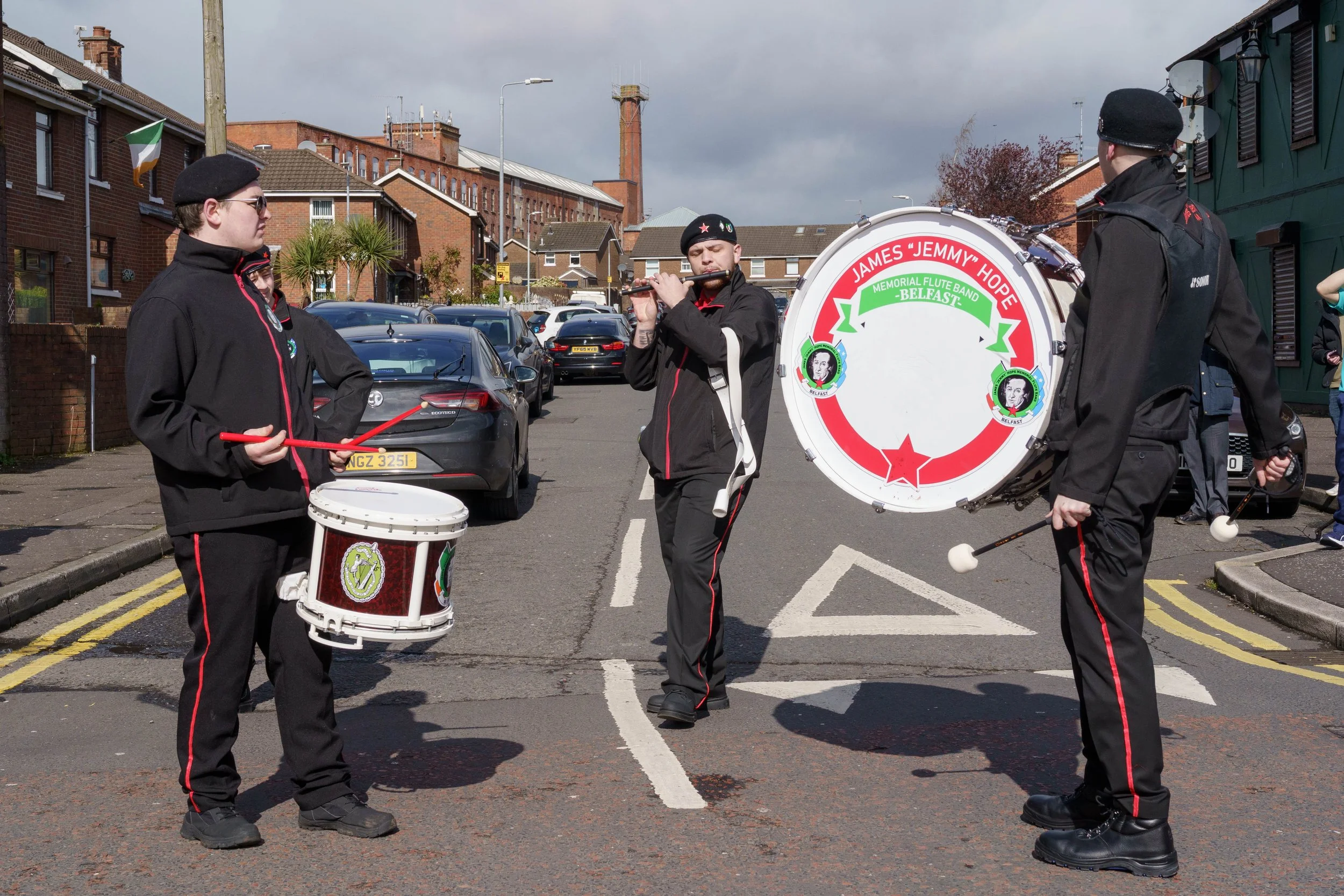
IRSP Easter commemoration, West Belfast, April 2026
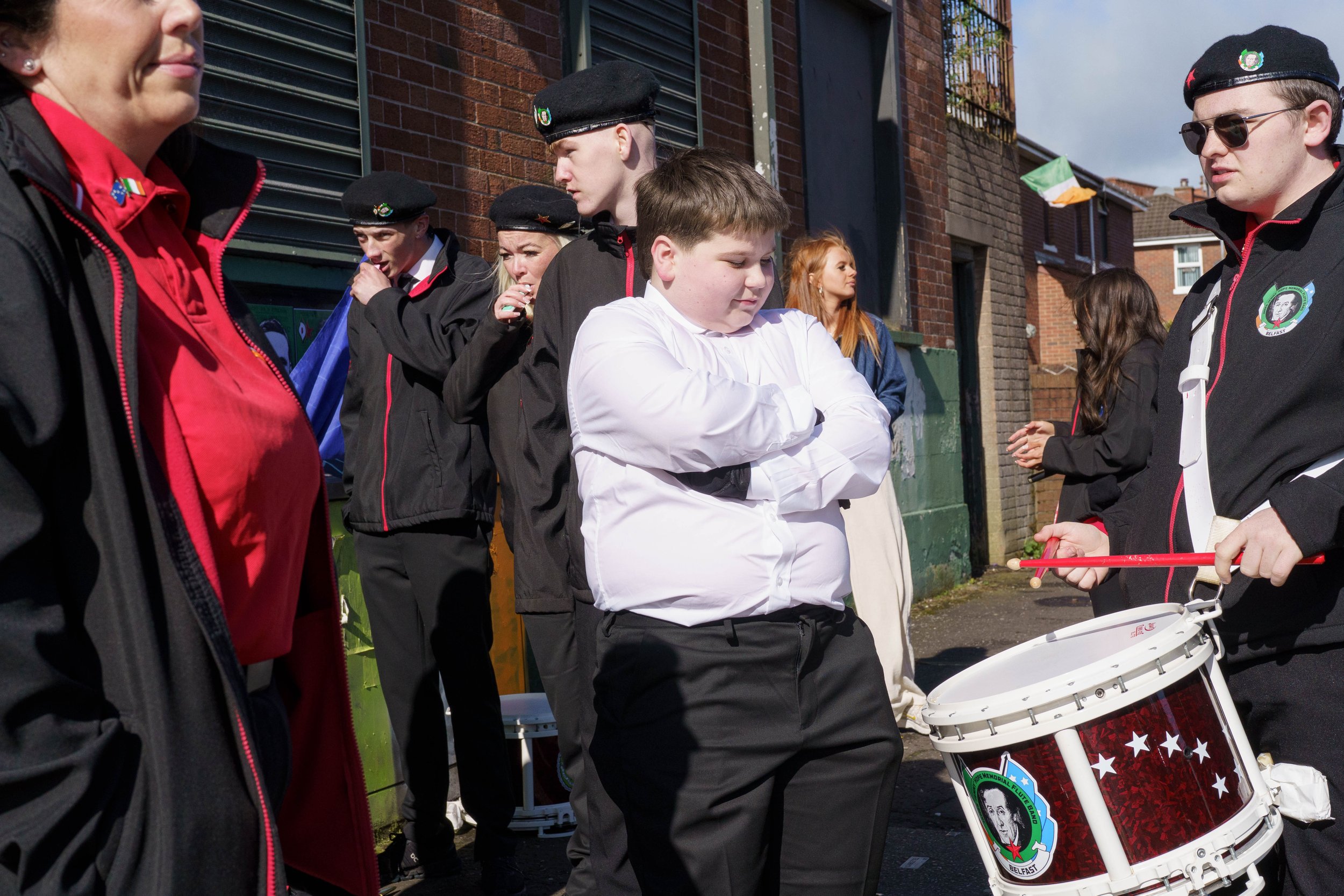
IRSP Easter commemoration, West Belfast, April 2026
Context
Before continuing, I just want to give a bit of context on what Easter means to the North of Ireland.
Easter here is not just a holiday.
It’s a moment of remembrance.
It goes back to the Easter Rising in 1916, when Irish republicans tried to end British rule.
Many of the people involved were executed, and since then, Easter became a time to remember them.
In Belfast, especially in West Belfast, these commemorations are still very present.
There are parades, gatherings, speeches, and people coming together to remember history, but also to express what they believe in today.
And that’s where it gets interesting as a photographer.
Because you’re not just photographing an event.
You’re photographing something that is still politically and emotionally alive.
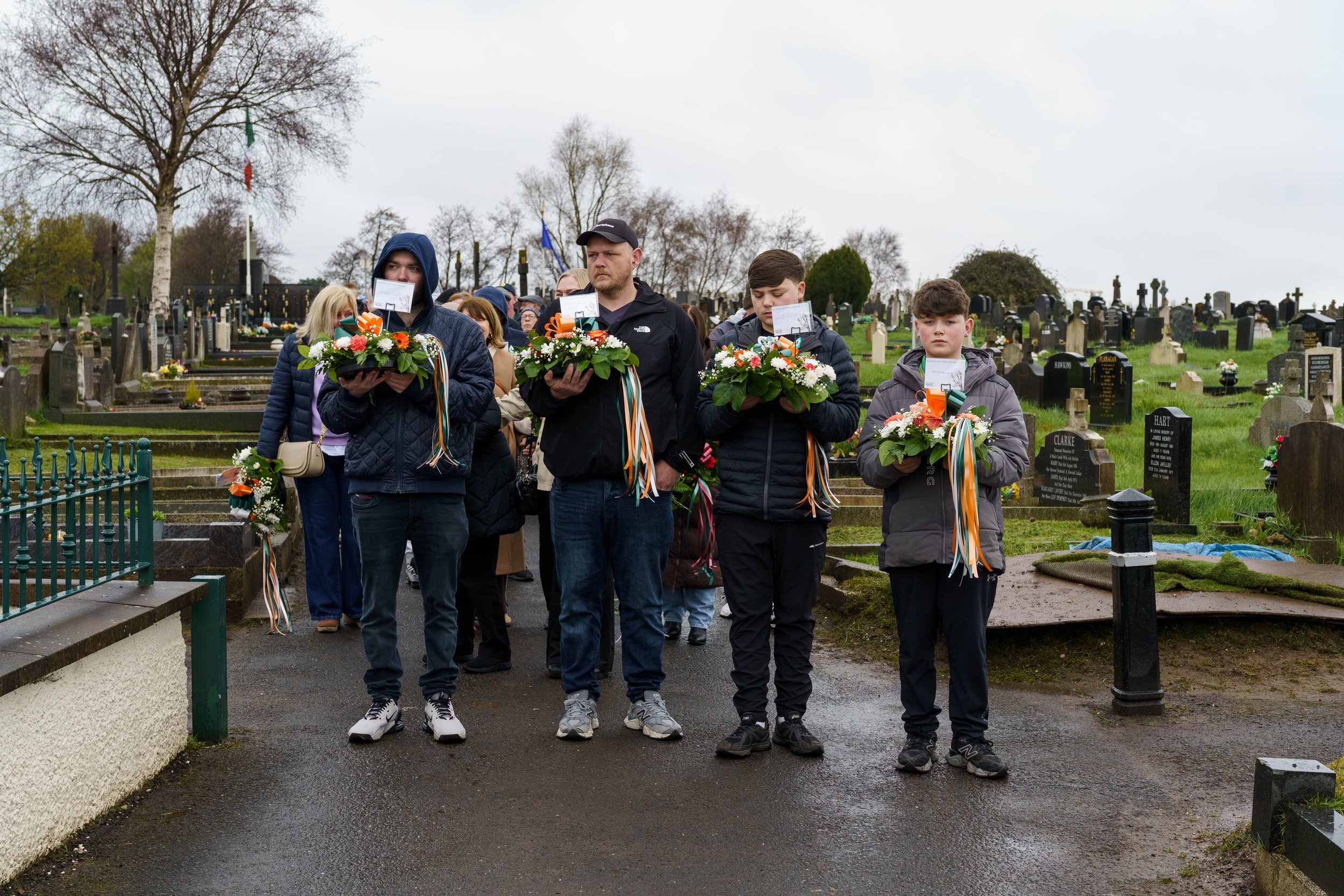
Workers’ Party, Milltown Cemetery, April 2026
Workers’ Party, Milltown Cemetery, April 2026
Workers’ Party, Milltown Cemetery, April 2026
How I approached it
Because I was approaching this as a photojournalist, I had to cover different types of shots.
Wide, mid, and tight.
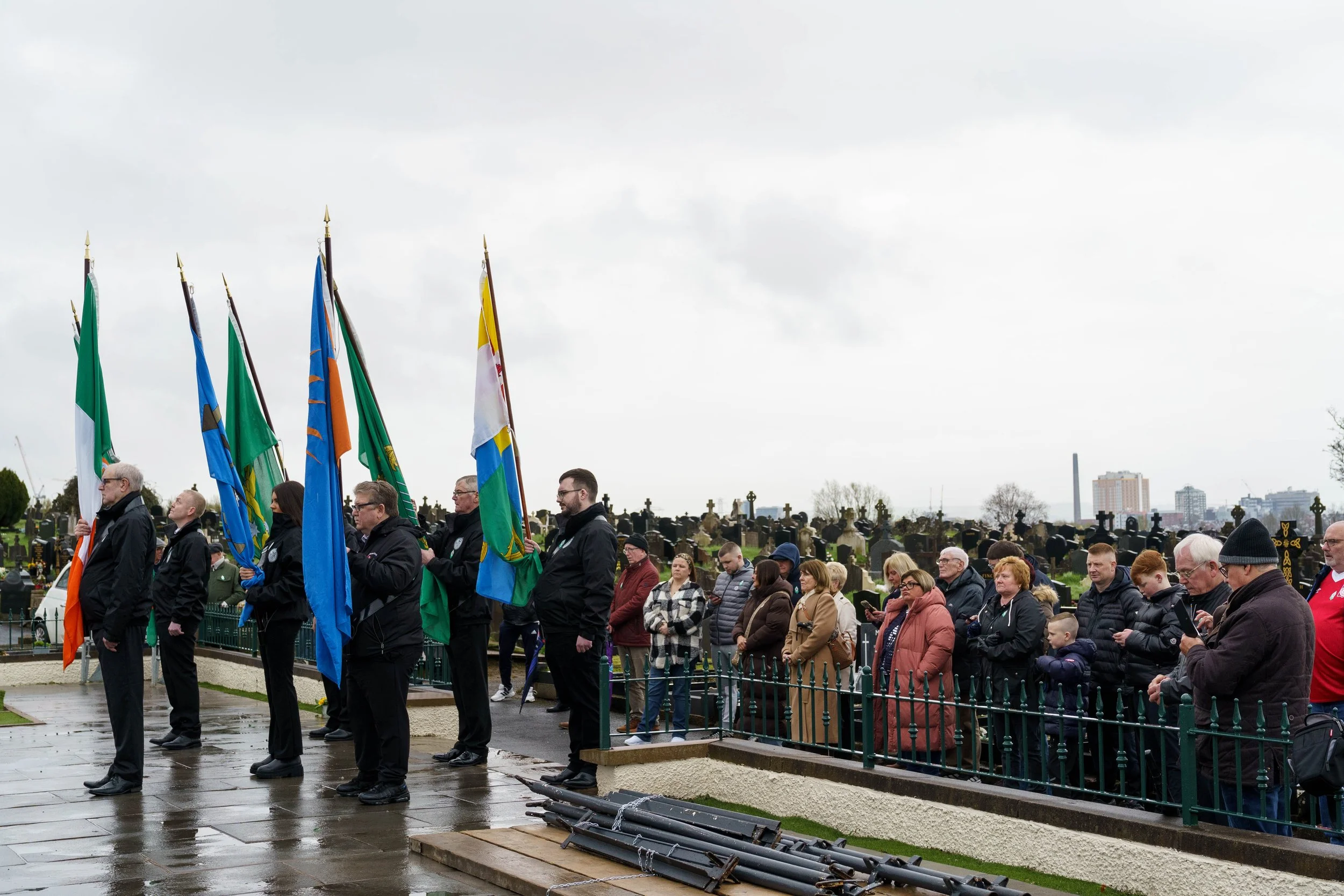
Wide shots tend to be simpler.
They are there to give a sense of placement and scale.
I don’t think they are always the most interesting images, but they clearly show where you are and what is happening.
Workers’ Party, Milltown Cemetery, April 2026
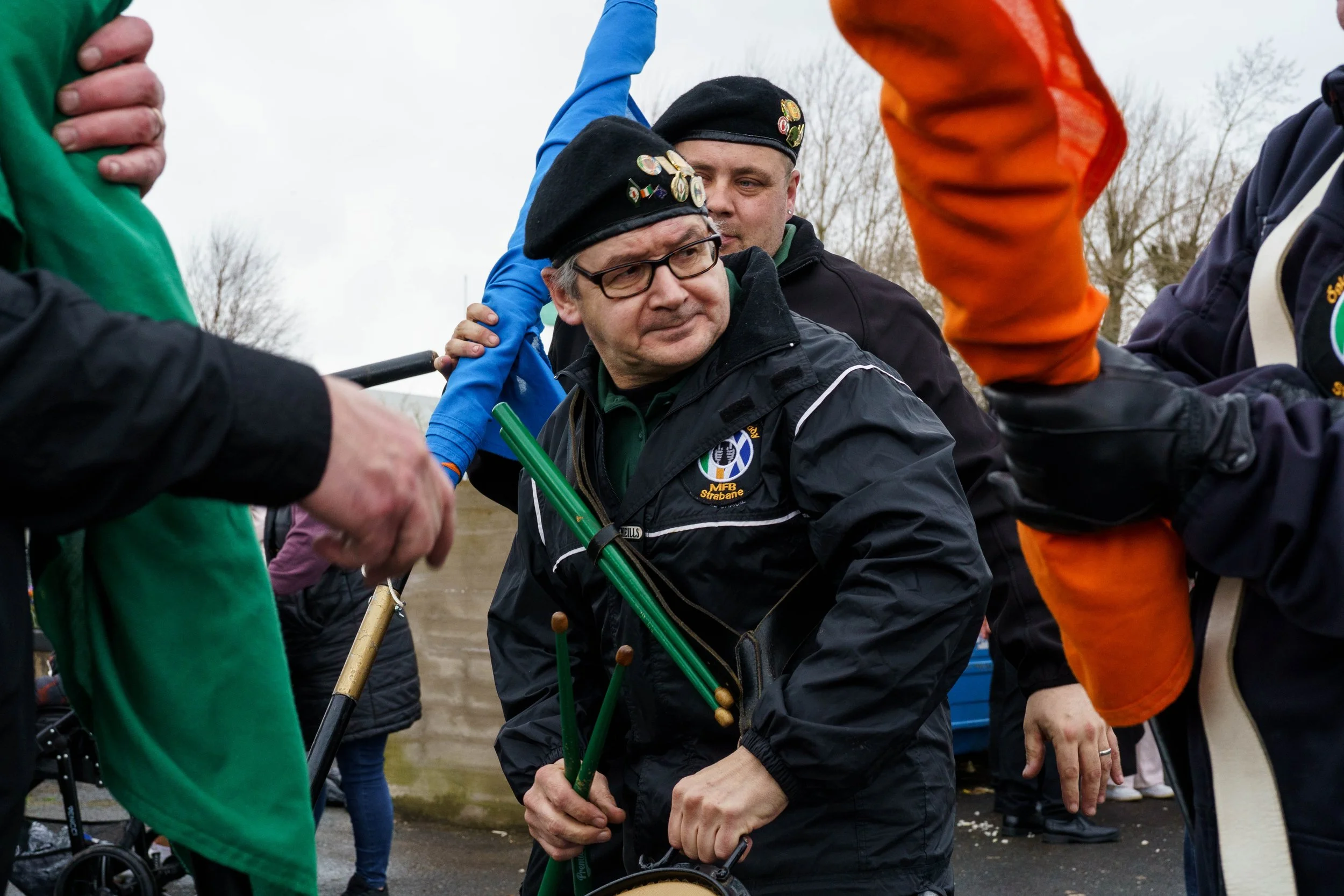
Mid shots are where you can get closer to what is happening.
You can give more information in your photograph.
This is where I feel most comfortable.
I like getting close to my subjects. I think it creates a better image.
Glór na hÓglaigh, Milltown Cemetery, April 2026
This photograph, to me, is not the most photojournalistic one, but I love that moment.
It’s about the hands. You can see so many hands in it.
It’s not a big moment, but it has something interesting and it gives context.
You still understand where you are, but you start to feel something.
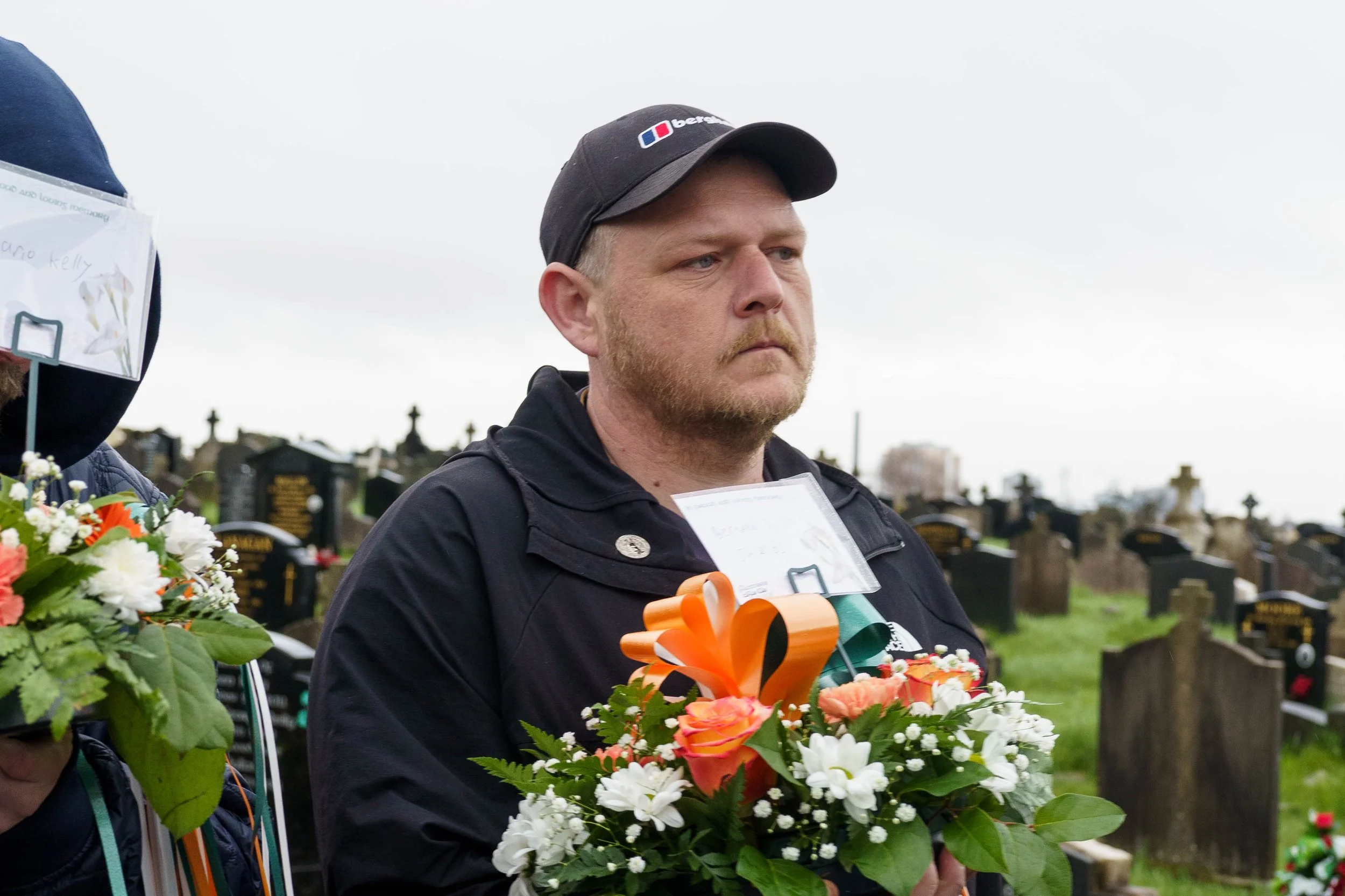
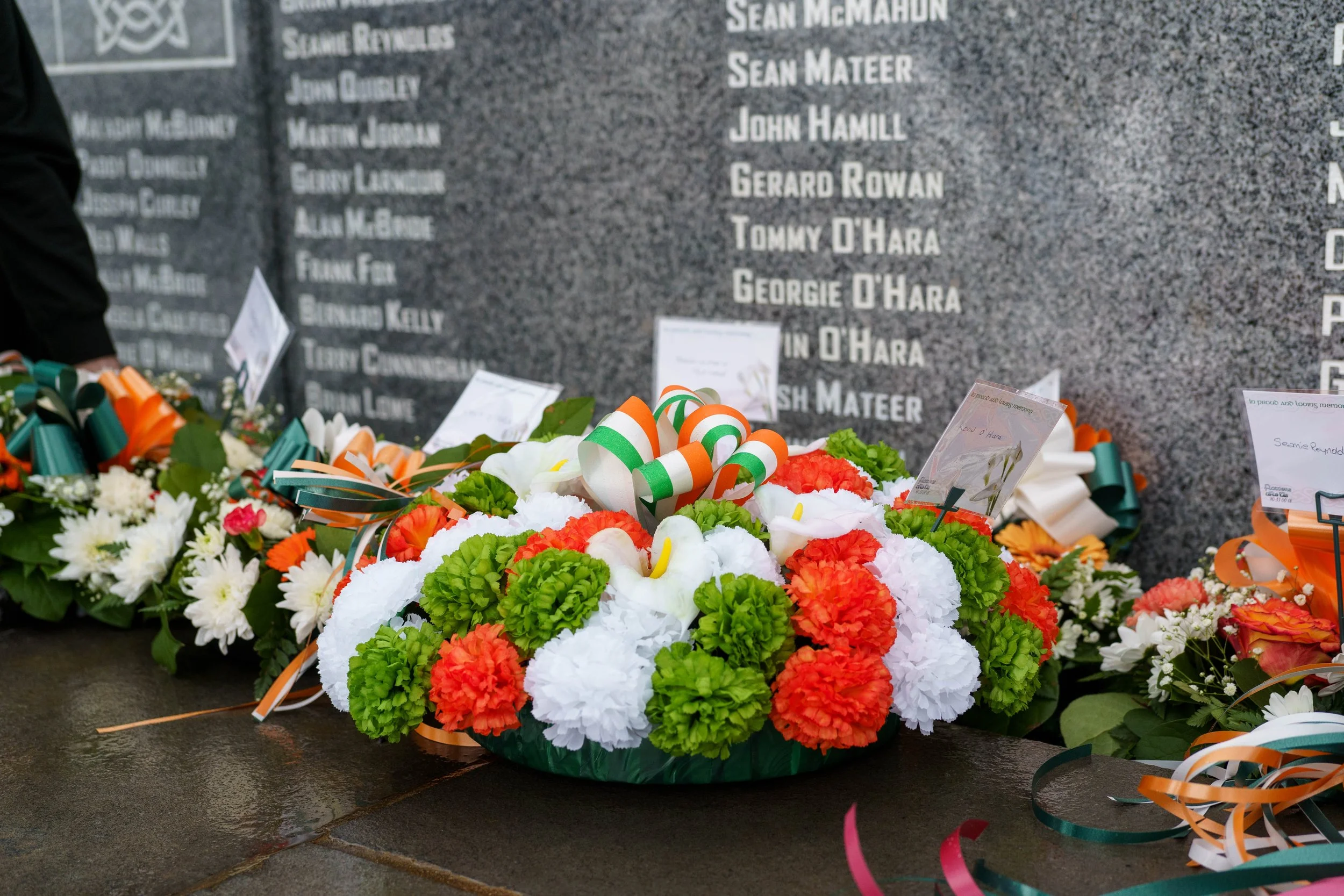
Tight shots are where you focus on something specific.
A face, a symbol, a detail.
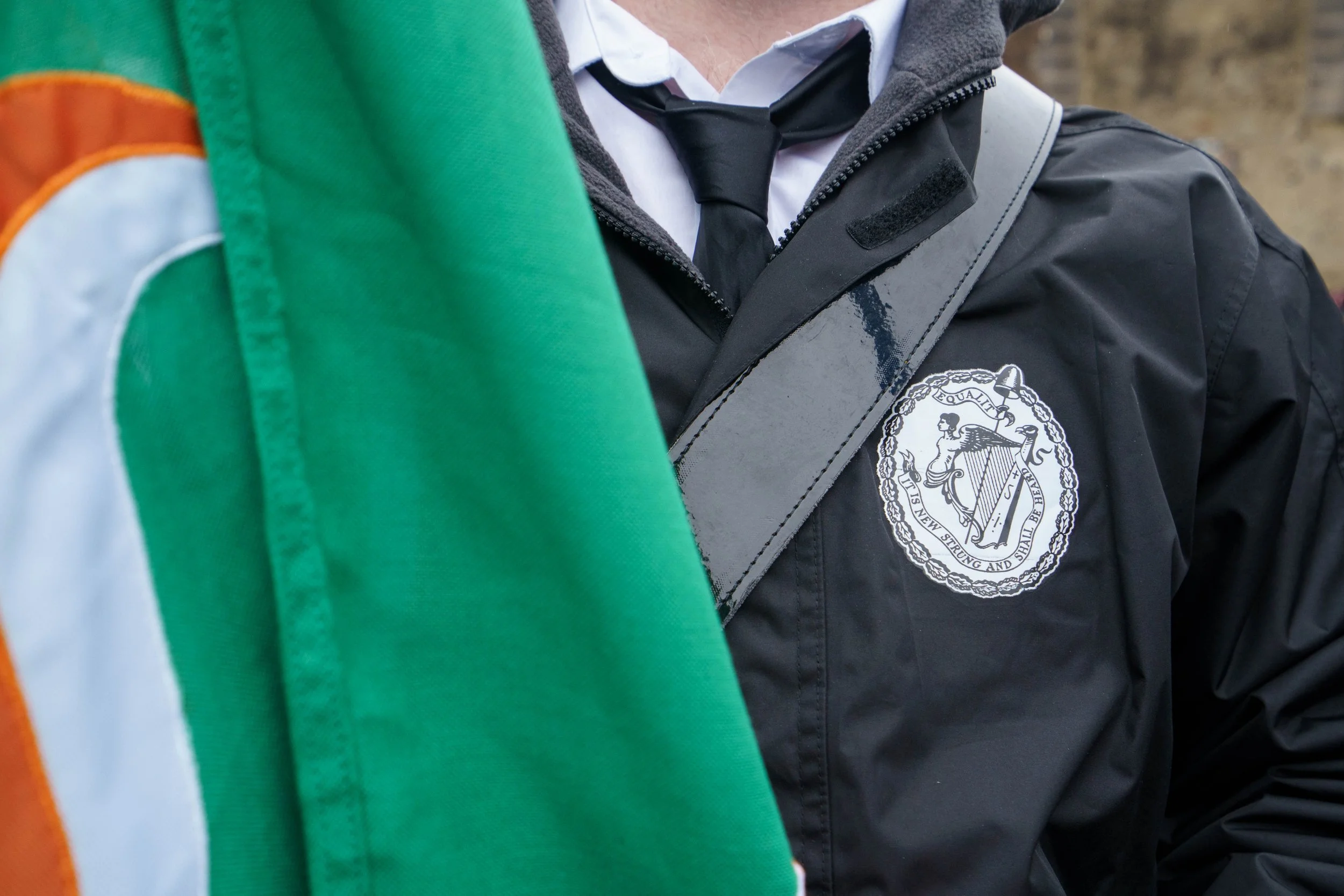
Workers’ Party, Milltown Cemetery, April 2026
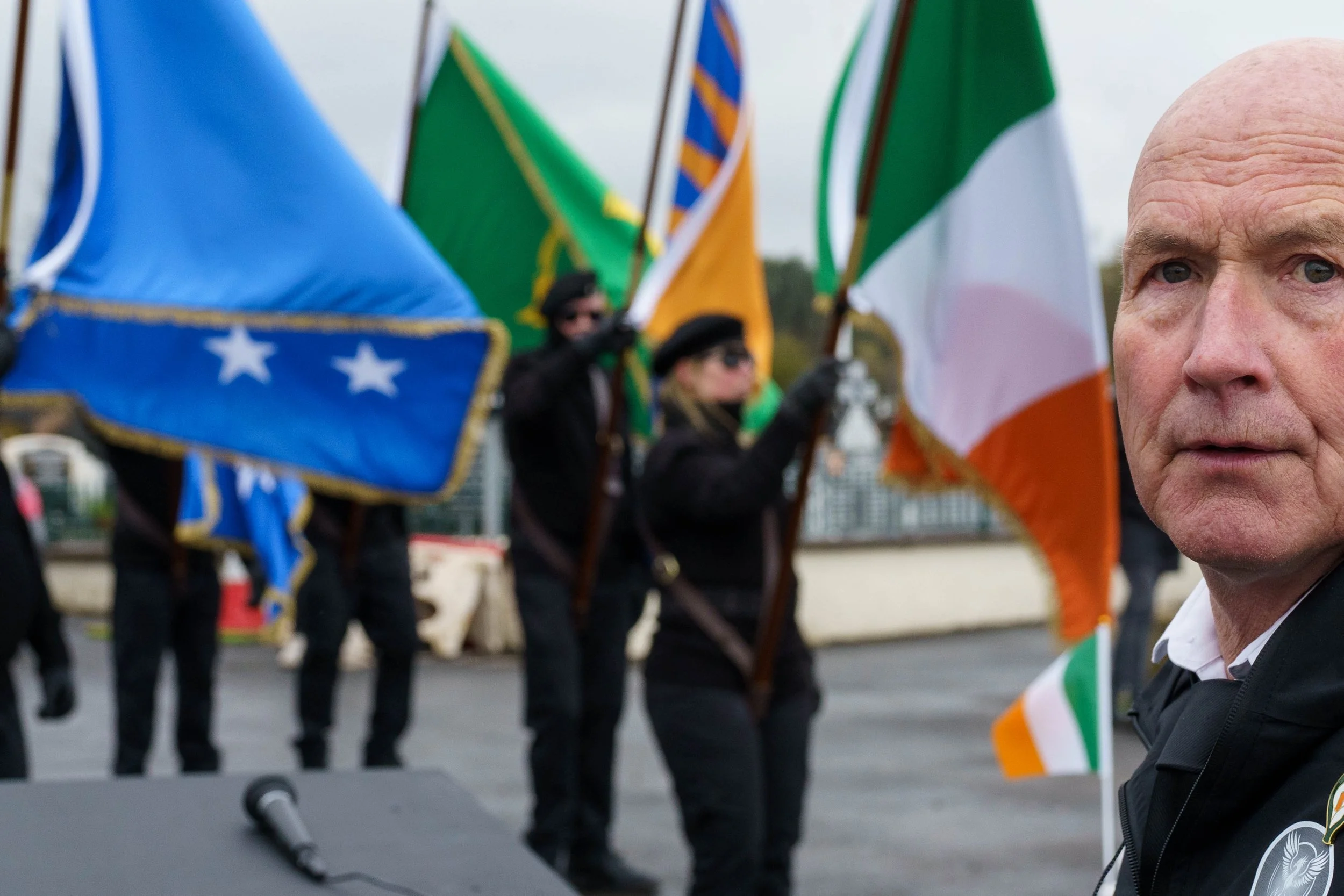
Glór na hÓglaigh, Milltown Cemetery, April 2026
In one of the images, I photographed a badge used by a member of the Workers’ Party.
It gives more detail on who they are and what they represent.
These shots don’t always have to be just one thing.
Sometimes you can combine ideas.
There is one image where I focused on a portrait very close to the subject.
He clearly felt uncomfortable with me being that close.
I like that image because it shows tension, but at the same time you can still see what is happening in the background.
Arriving early
I shot during two days of commemorations.
During those two days, I made sure to get there at least one hour before each event.
That made a big difference.
On the first day, I wanted to see the beginning of everything.
People getting ready, meeting each other.
I also wanted to introduce myself.
Events like this can be very personal, so it’s important to arrive early, explain what you are doing, and just be nice to people in general.
Of course, that doesn’t work in every situation.
It was actually hard to find where the first event was starting.
People were giving me different information, mixing it with the events from the next day.
So it took me a while to find it, which made arriving early even more important.
Because I was early, I could also see who was organising everything and approach her.
I explained who I was and what I was doing.
That gave me the opportunity to get her email and make a new contact.
And that’s important.
Creating contacts while you are on the field.
Another thing that helped me was that people got used to my face.
I was there since the beginning.
That made shooting much easier.
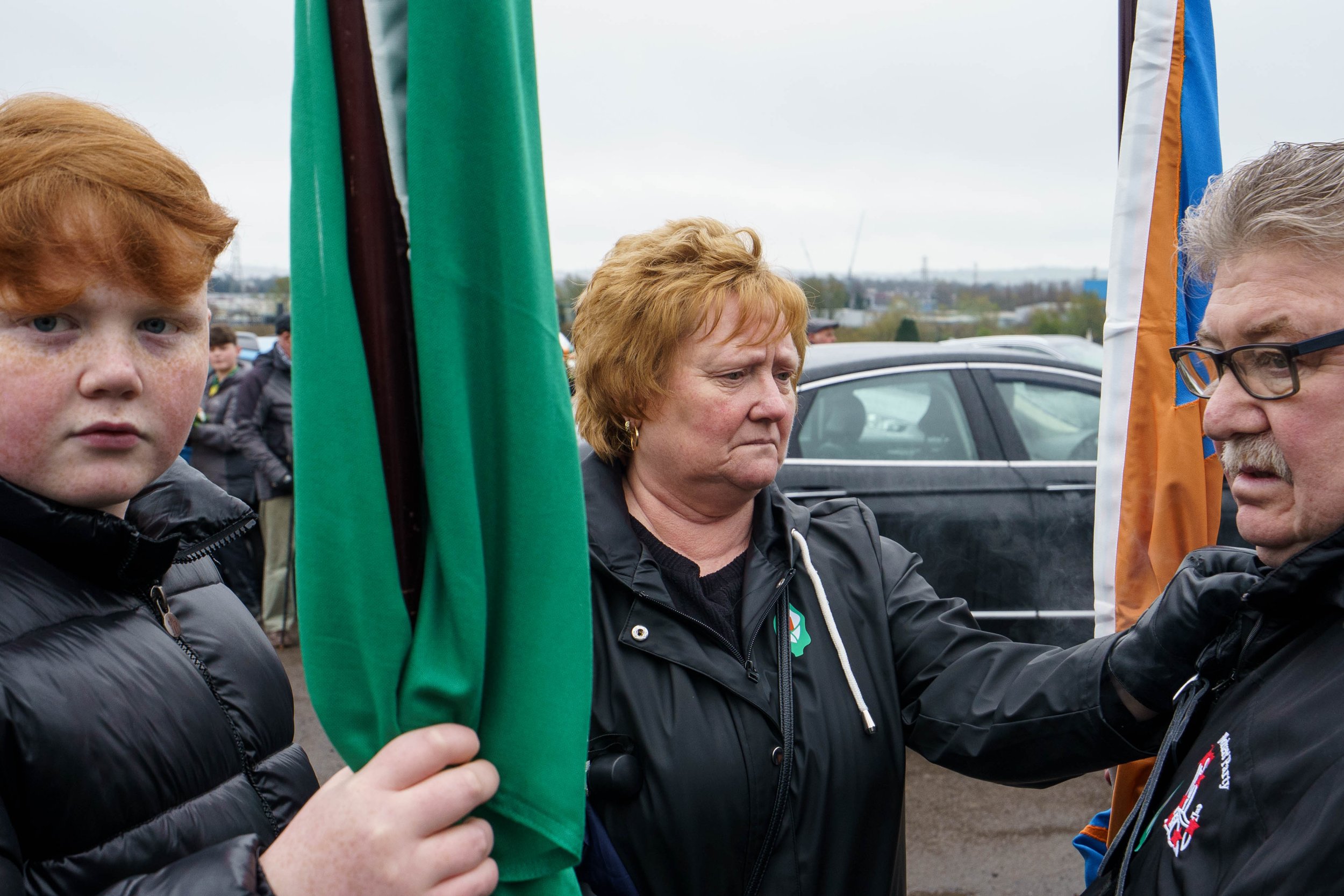
Workers’ Party, Milltown Cemetery, April 2026
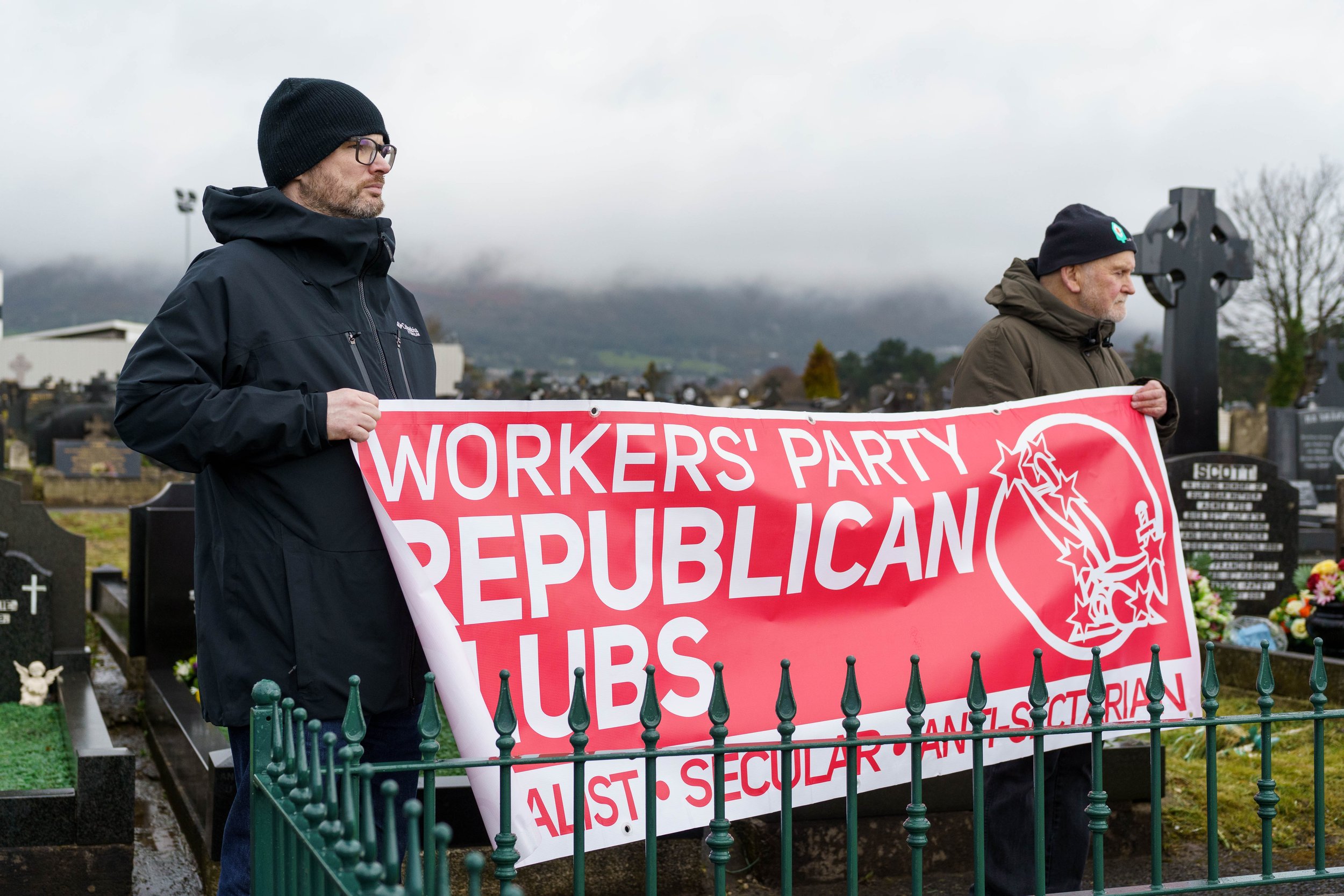
Workers’ Party, Milltown Cemetery, April 2026
Second event
The second event that day was Glór na hÓglaigh.
I ran to where they were starting and started working straight away.
The feeling was different.
Because I wasn’t there from the start, I didn’t know my ground yet.
But I had already warmed up, so I felt comfortable enough.
There were more photographers there and a clear presence of the press.
After the event finished, I did something that I think is very important.
I introduced myself to other photographers.
To be honest, this is very hard for me.
I always feel awkward doing it.
But that day I pushed myself.
Everyone was very friendly, which helped a lot.
Networking is a big part of this.
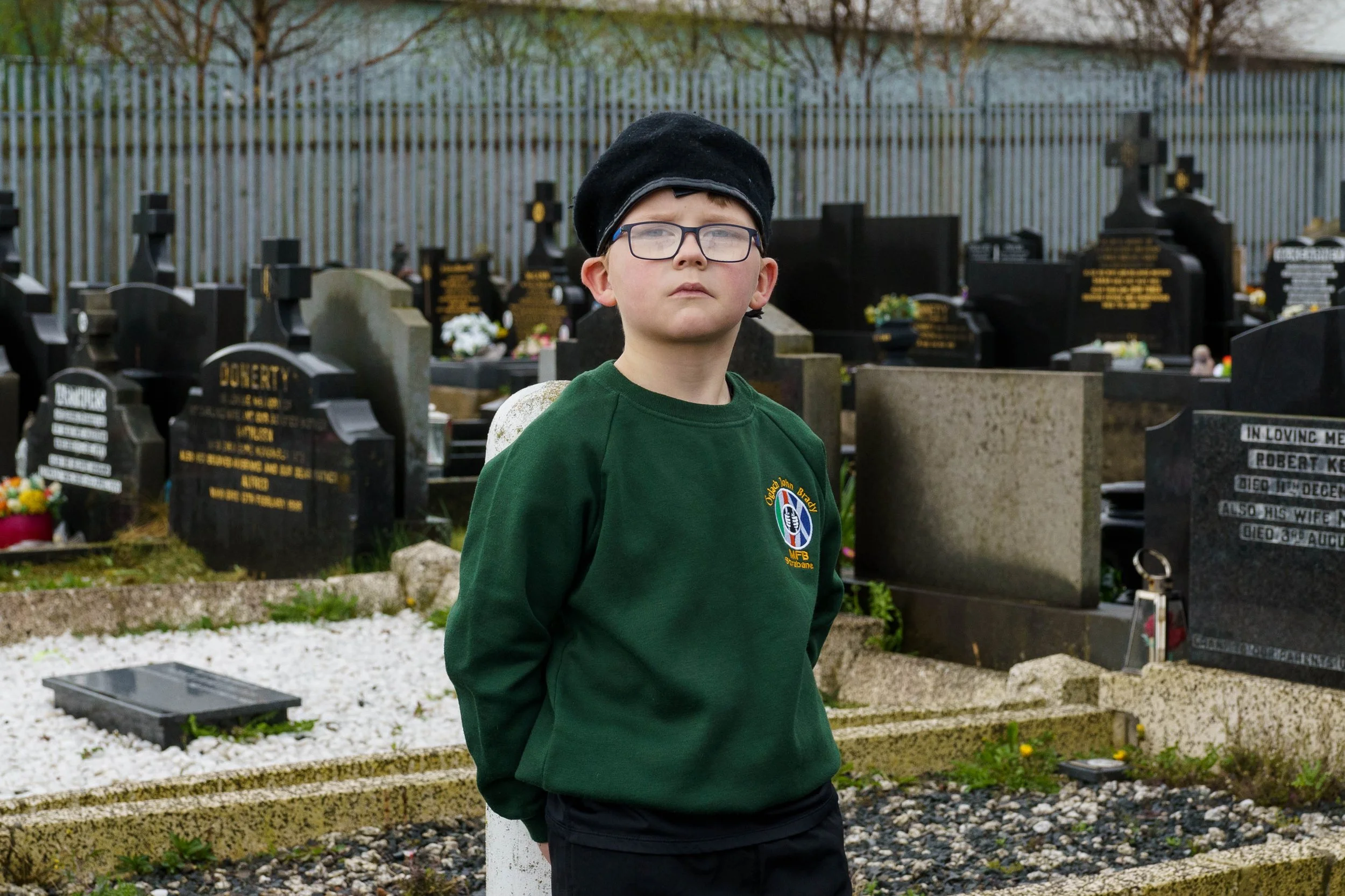
Glór na hÓglaigh, Milltown Cemetery, April 2026
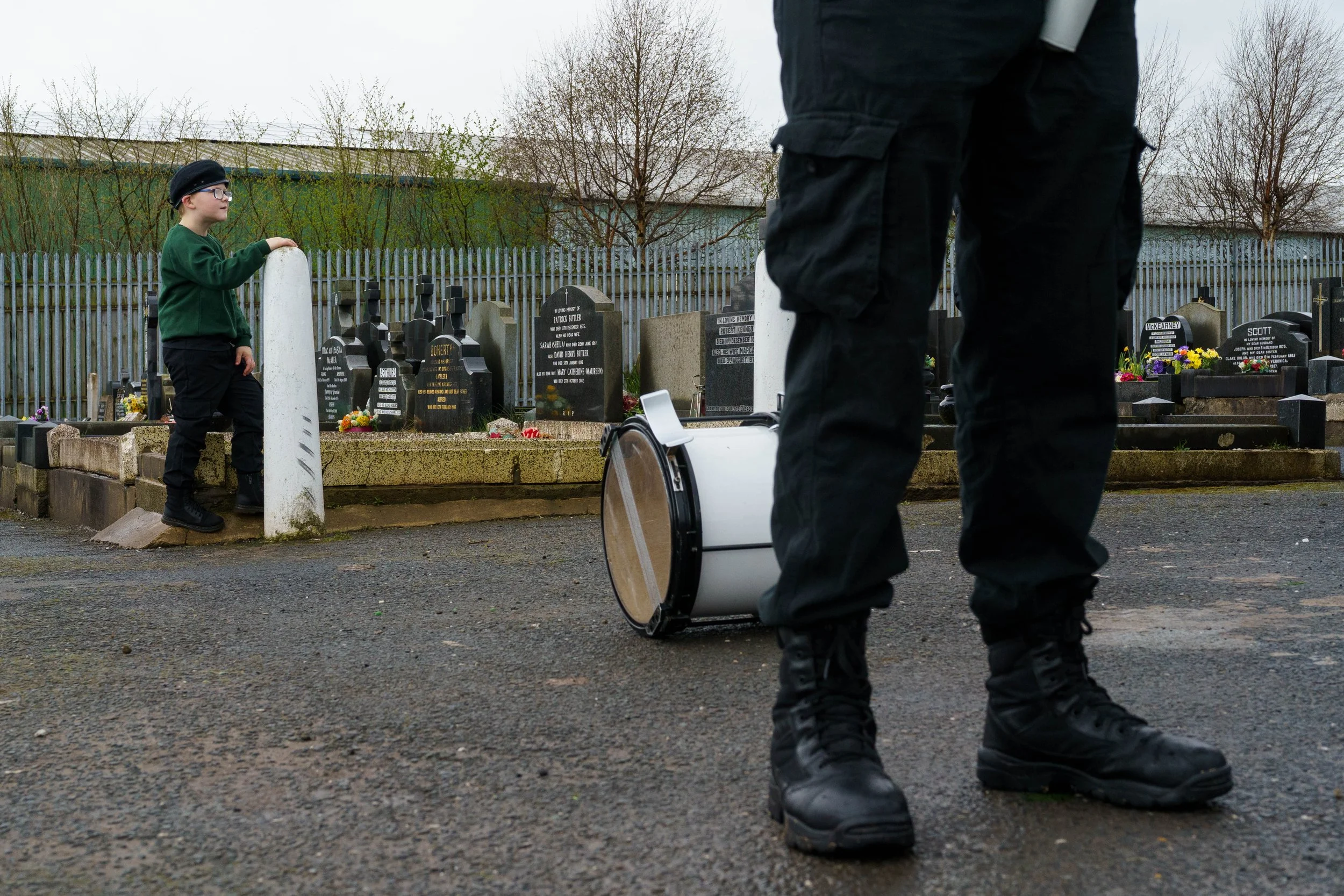
Glór na hÓglaigh, Milltown Cemetery, April 2026
Sending the work
After the event, I went home and edited as fast as I could.
Before that, I had already searched for editors and photo editors from local news, so I had their emails ready.
I made a selection of 3 to 5 images and sent them.
Trying to show a mix of wide, mid, and tight shots.
I also introduced myself and explained my work.
I wasn’t expecting to get published straight away.
The goal was to show who I am and start building connections.
The difficult part
One thing that is always hard for me is the political side of it.
I have my own views.
And sometimes you have to send your work to outlets that don’t align with them.
Sometimes you know they might use wording you don’t agree with, and your photograph will be there.
That’s something I’m still trying to understand.
But at the moment, I know I need to start.
Build connections.
Get my work out there.
Second day
The second day, I did the same thing.
Arrived early, introduced myself, spoke to people.
Because I had done it the day before, it felt much easier.
This was a bigger event, an IRSP commemoration.
There was a parade and speeches.
It was a longer day because I was trying to cover everything from start to finish.
Moving between the front and the back of the parade.
Usually, as a street photographer, I focus on the people watching.
But this time, I focused more on the parade itself.
I still photographed the crowd, but my main focus was different.
At some point, I felt like I was repeating myself.
Maybe I was tired, or maybe the event was similar.
But I kept shooting and tried to find different things.
After that, I went home again, edited quickly, and sent more emails.
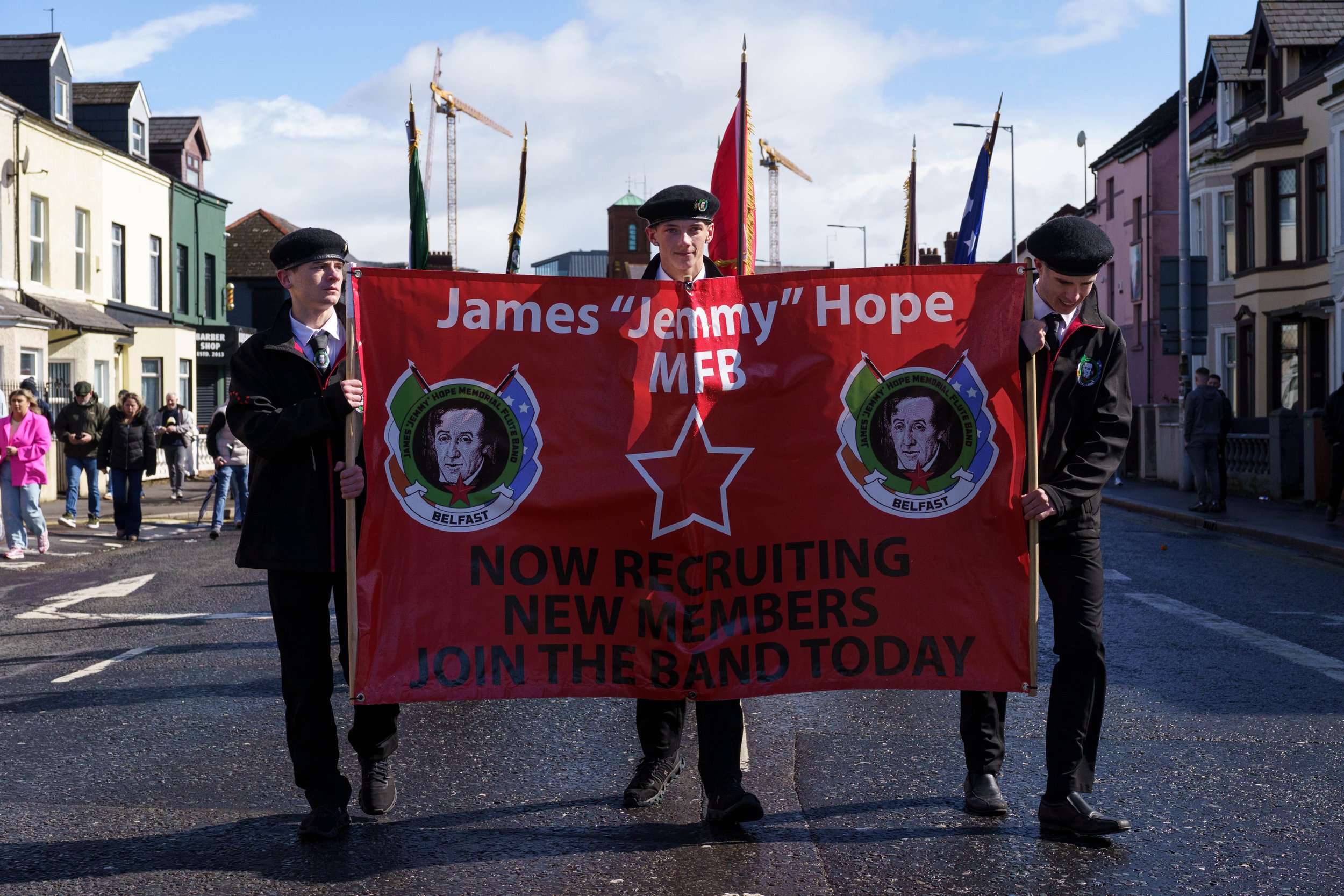
IRSP Easter commemoration, West Belfast, April 2026
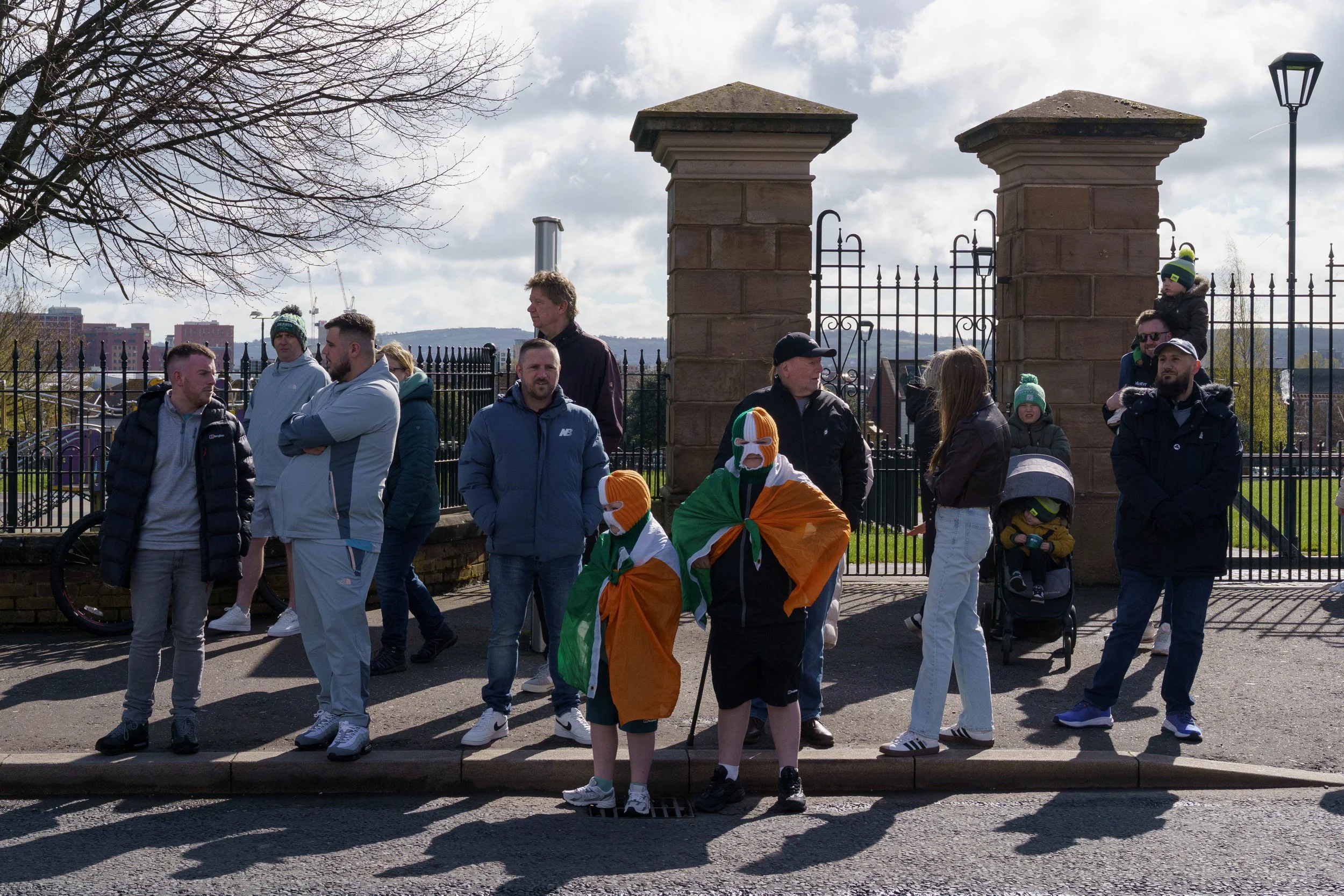
IRSP Easter commemoration, West Belfast, April 2026
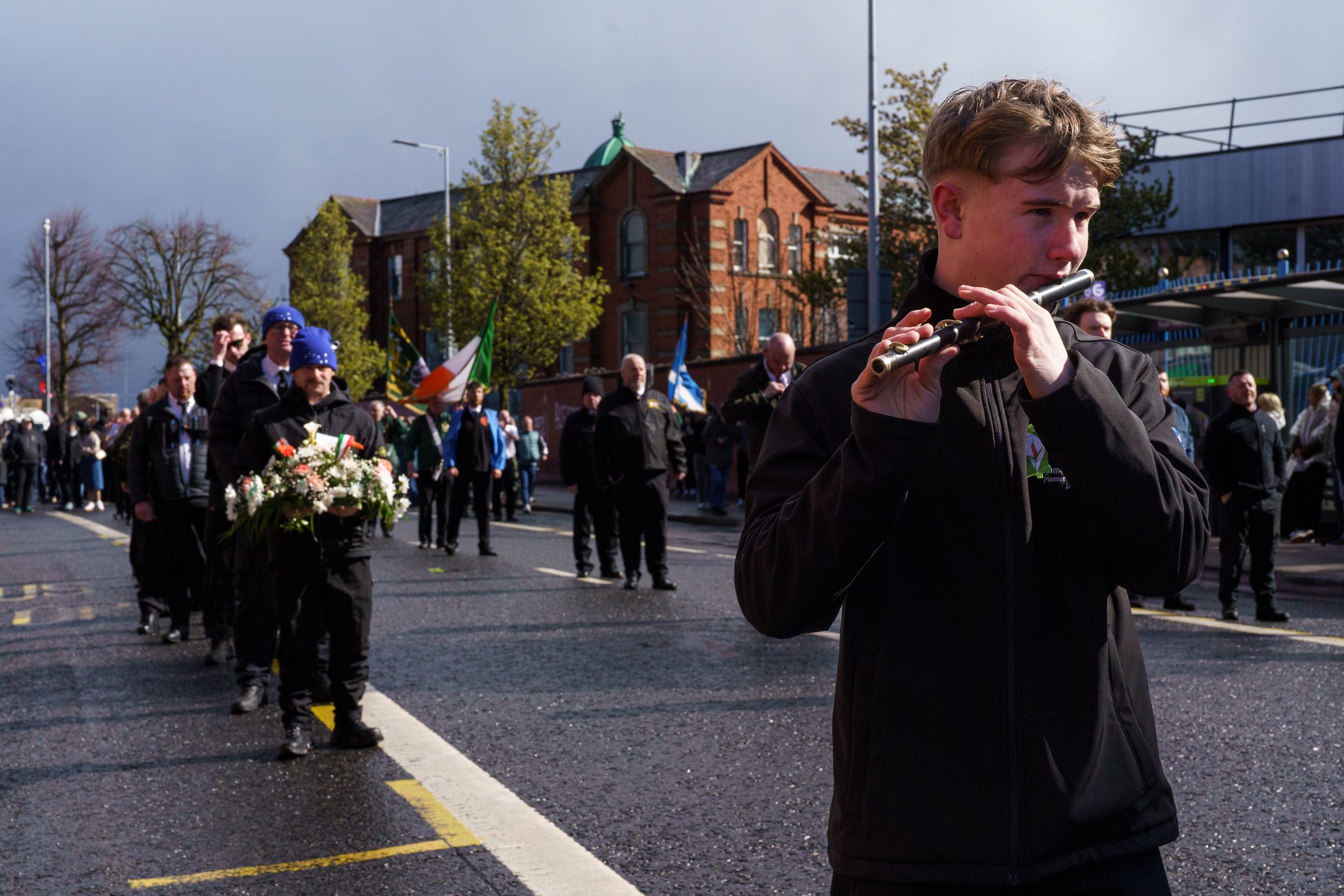
IRSP Easter commemoration, West Belfast, April 2026
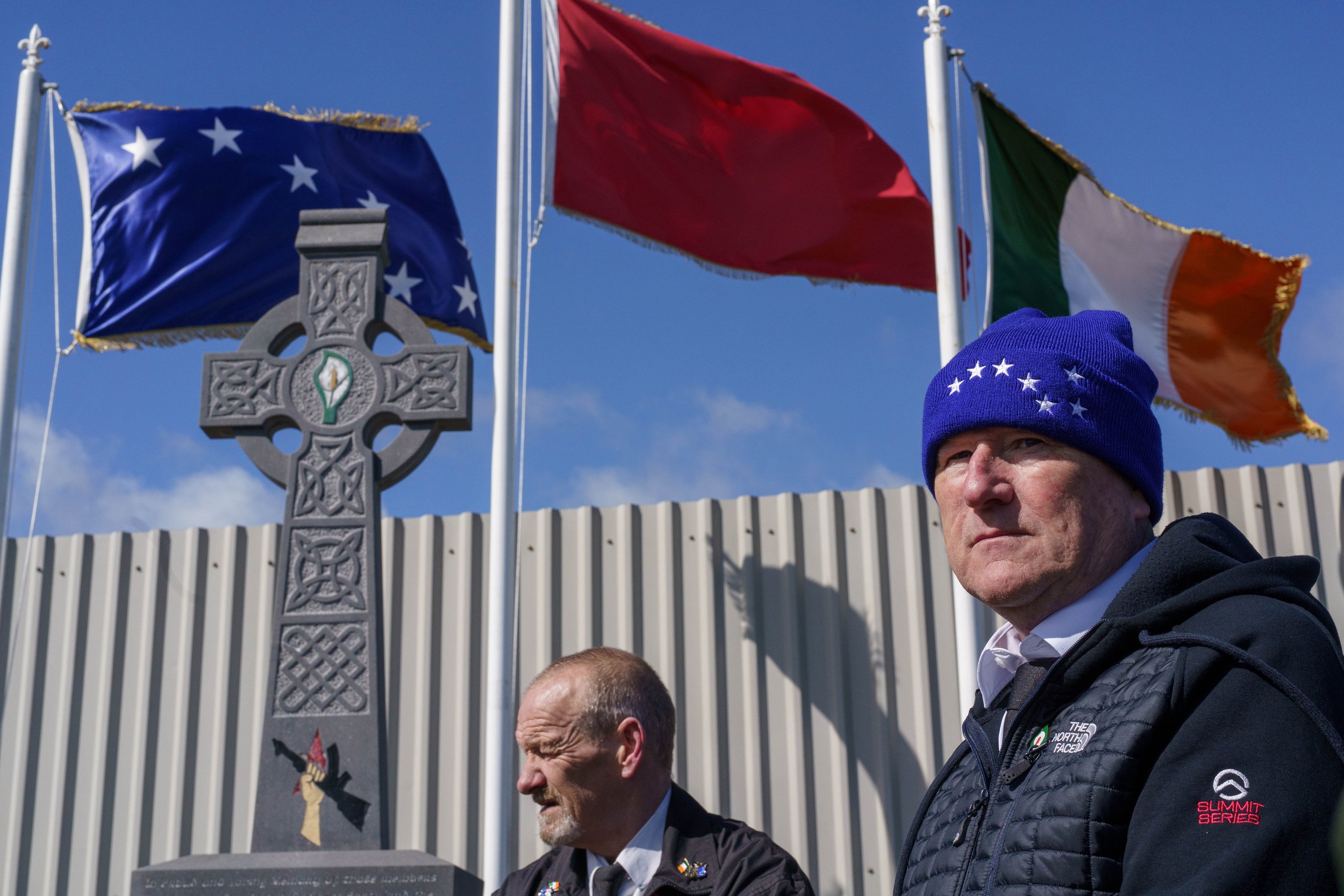
IRSP Easter commemoration, West Belfast, April 2026
Final thoughts
I feel like the speed of everything, and sending your work to places you don’t fully agree with, is one of the hardest parts of this.
But it’s part of the process.
I’m glad I did this.
I learned a lot during this weekend, and I actually enjoyed it, even if it’s different from my usual work.
Some of these images are still close to my style.
But not everything is exactly what I would normally show.
And that’s fine.
Watch the video
If you prefer to watch the day instead of reading about it, I made a video where I talk through everything while it was happening.
I show the process, the photos, and what I was thinking during the day.
You can watch it here: